
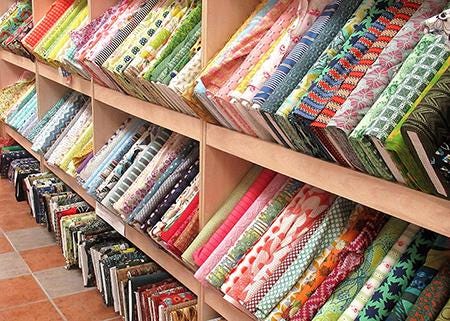
As I continue to add topics to this blog, I'm realizing that I perhaps should have written these in a bit more linear fashion, starting at the beginning - a visit to the fabric store. So, let's do that today. Walking into a fabric store is one of my favorite things to do. Hundreds of bolts of beautiful fabric, just waiting to be used in my latest creation. But for some, this can be overwhelming, and a downright daunting start to the quilting process. A top challenge for quilters of all skill levels is picking out fabric that creates an optimal color scheme, myself included. I spent 15 years as a graphic designer, so matching colors was literally my job, and yet, even I've had a few misses coordinating fabric colors. So, where should you start?
1. Get a Cart
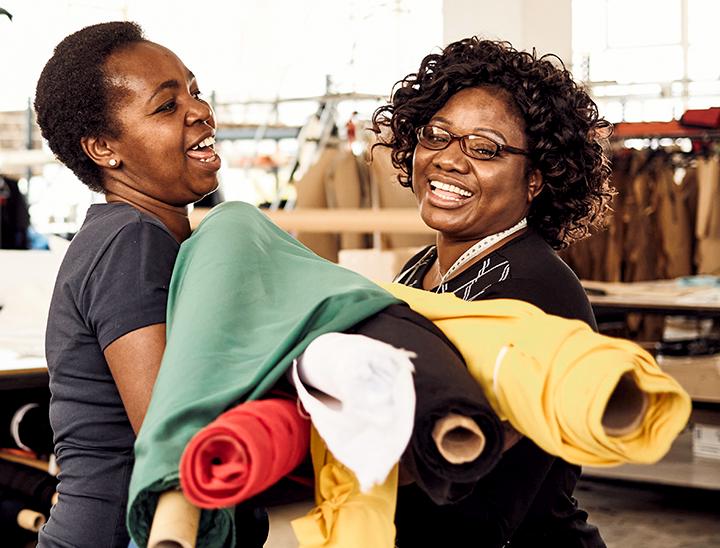
Unless you are actively working on building up arm muscles or a balancing act for the circus, grab a cart at the store entrance. Fabric is sold on bolts, and depending on the pattern, you'll need a minimum of three fabrics. A full bolt can weight 5+ pounds and measures 3 feet long, and as they start piling up in your arms, carrying them around becomes quite unwieldy. Or, you could make a new friend, like these ladies.
2. Grab a Kit
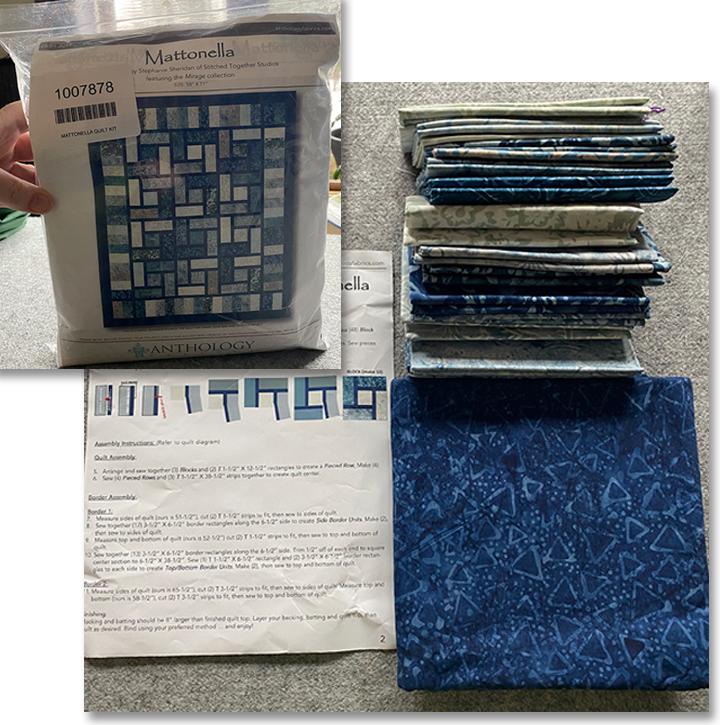
These are a great way to get started, especially if walking into a fabric store makes you want to turn around and run back out. Head straight for the kit section and pick out something small (I recommend a baby or lap size quilt to get started), with an "Easy" skill level, and colors you like. The kit will include a pattern with directions and all the fabric you will need for the quilt top (in some cases, cut to size), helping you get off to a speedy start. I like to pick up kits on clearance for quick, rainy day projects.
3. Choose Pre-Cuts
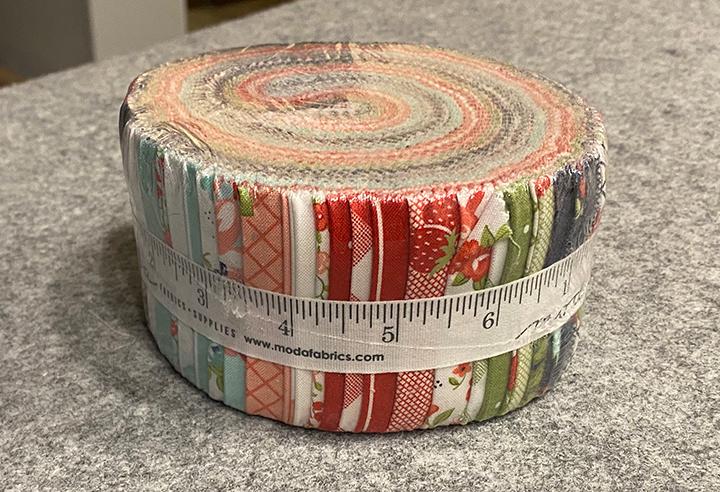
Another way to get in and out of the fabric store quickly is to grab a pack of pre-cuts, a bundle of coordinating colors and patterns that fabric manufacturers and stores sell as a set. Pre-cuts take all the work out of choosing fabrics, and are especially great for patterns that require more than 5-6 fabrics. They come in 4 basic sizes: Charm Pack (5" squares); Layer Cake (10" squares); Fat Quarters (18" x 22"); and Jelly Rolls (2-1/2" strips). Depending on the pattern, it may recommend a certain type of pre-cut. For instance, the Yellow Brick Road is a "fat quarter friendly" pattern. I love pre-cuts, and highly recommend them when you are getting started.
4. Shop a Designer Collection
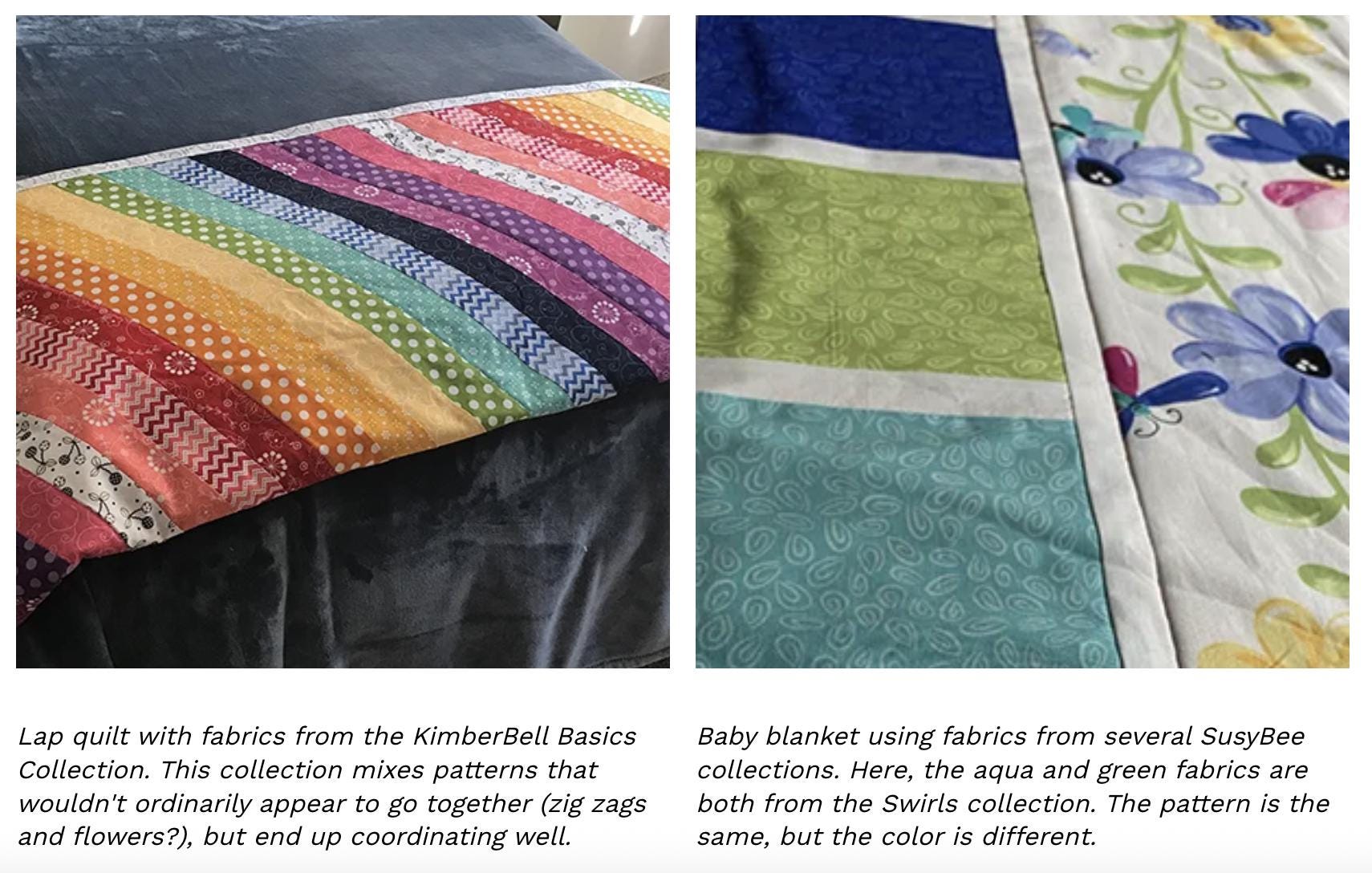
Instead of a package of pre-cuts, which may include colors or patterns you don't like, specifically hone in on a particular designer's collection. A fabric collection is comprised of various types of patterns specifically chosen to work well together, and often have a unifying theme. Many of the prints will be available in multiple color options, allowing you to pick the print and then find the color that works with your quilt. Two of my favorite designers are Robert Kaufman and Jinny Beyer, and I'm always on the lookout for their latest collections and fabrics.
5. Pick a Focus Fabric
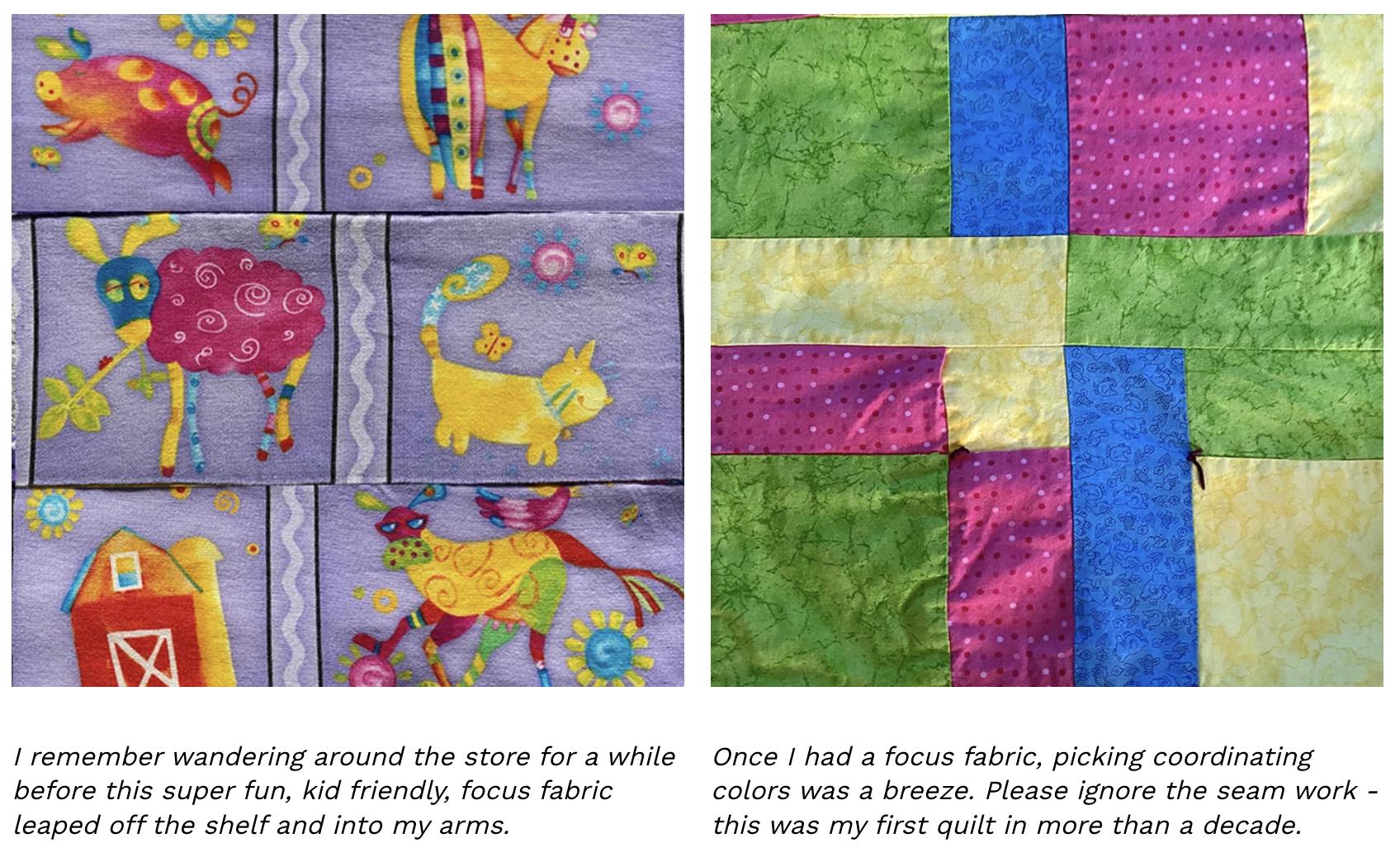
Let your eyes roam around the store until a bolt of fabric jumps out at you. Make this your focus fabric, then choose fabrics that match colors in the focus fabric. I did this with Rachel's baby quilt. The bright animals in the border fabric grabbed my eye and made it easy to pick 4 coordinating colors. The pattern probably could have benefitted from more than four fabrics, but I forgot to get a cart, so that was as many bolts as I could carry.
6. Check the Selvage
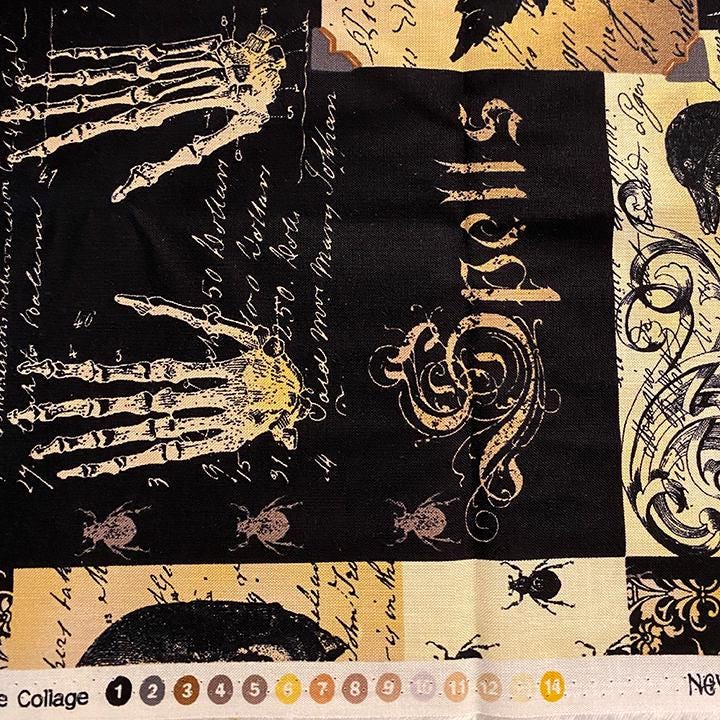
There's a small, half-inch strip along the bottom of the fabric called selvage, which includes the name of the designer and one or more circular dots. Each dot is one of the ink colors used in the fabric printing process, and these dots can help you quickly create a color scheme.
7. Imitate the Cover Photo
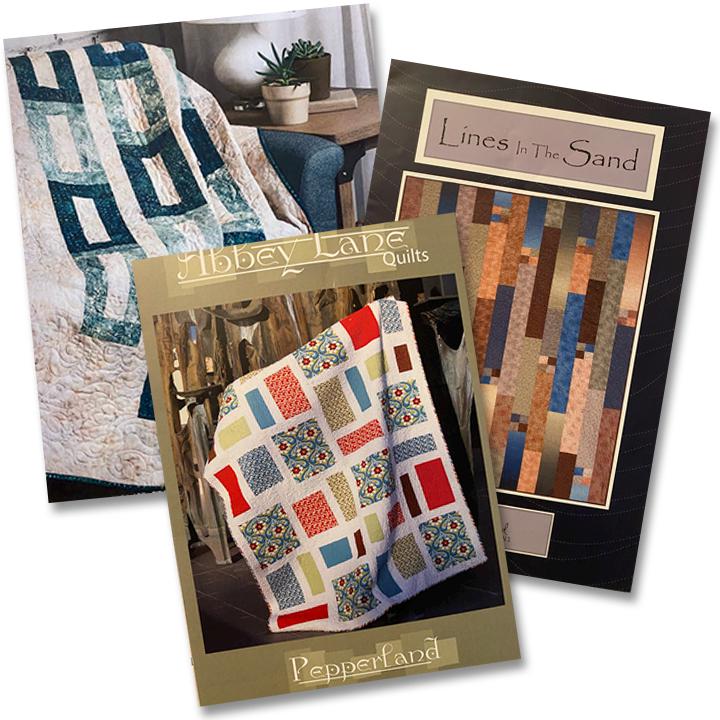
The cover of most patterns has a photo of the finished quilt, and you can use that as inspiration. Someone put in a lot of effort to make that quilt - why reinvent the wheel? Imitation IS the sincerest form of flattery. While it's unlikely you'll find exactly the same fabric (designers are constantly creating new, and retiring old, patterns), however, you can probably come very close. You can also scour the internet (particularly ebay and etsy) to find out of print patterns.
Now let's look at some other things to consider:
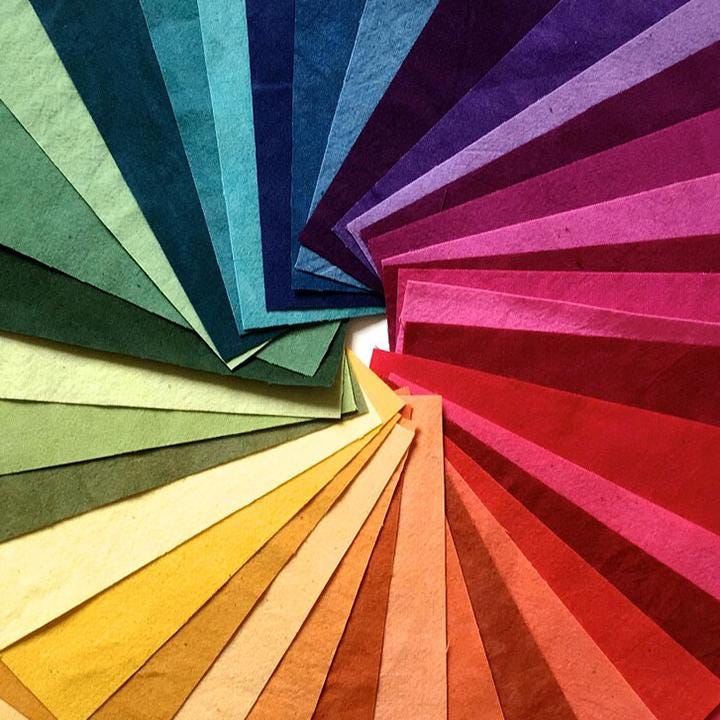
- Color: Remember learning about the color wheel in grade school? A basic understanding of the color wheel can help you pick out your colors. A monochromatic color scheme will have you picking variations of a single color. With an analogous color scheme, you'll select three colors next to each other on the wheel (i.e., yellow, green, and blue). Complementary colors are opposite each other on the color wheel, such as red and green, or orange and blue.
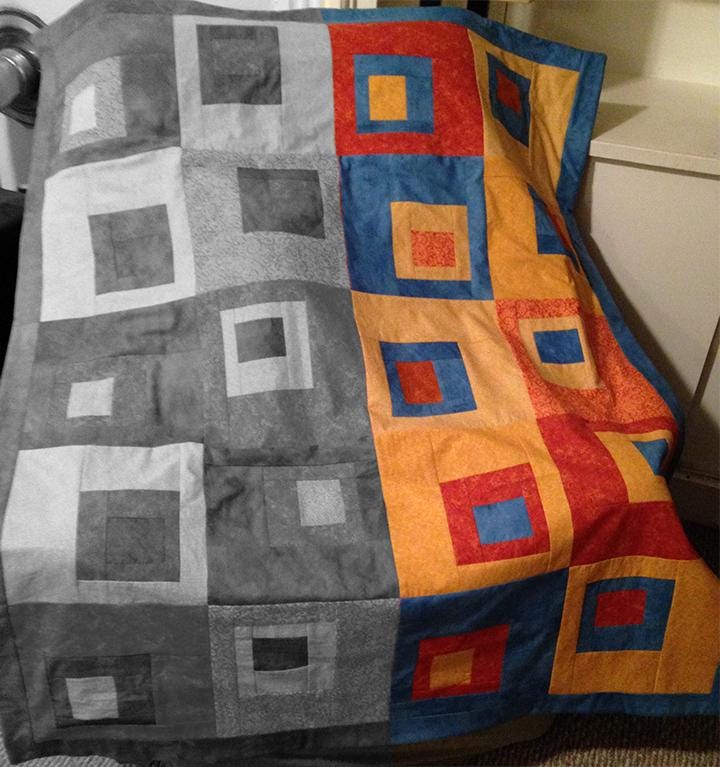
- Value and Contrast: This refers to the lightness or darkness of the fabric. To create depth in a quilt, you'll want a mix of light, medium, and dark values. To help you out, take a photo of the fabrics on your camera, then convert the photo to black and white. Is there contrast, or are all the fabrics the same value of gray? In this example above, I've got 10 different colors and patterns, but most of them have medium values, lending little contrast to the quilt. The lady at the fabric store told me that when I picked out the fabric. Life lesson: listen to the fabric store employee.
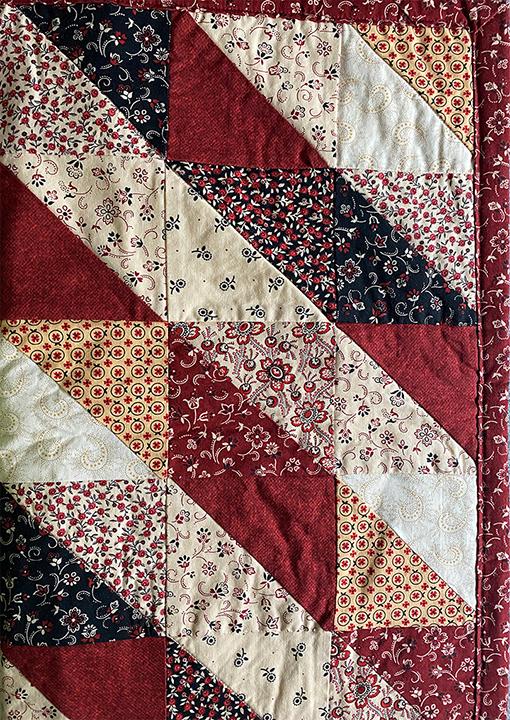
- Scale: Patterns are designs that repeat throughout the fabric, and the size of the pattern is known as scale. Using patterns of all the same scale can make your quilt look busy. Using a mix of large and small patterns, as well as solid colors, can create a pleasant balance. This example is from a kit using pattern elements of similar size, but with varying space between them.
Shopping online
Today, I shop online far more than I do in-store. While it does not deliver the same sensory experience a trip to the store does, it does get the job done, and I get to stay in my PJs.

A couple of things to pay attention to:
- Fabric content: Quilting fabric should be 100% cotton. There is nothing so frustrating as ordering a binding fabric only to have it arrive and be flannel.
- Scale: A lot of photos will include a ruler or other common object to help you visualize the size of the pattern.
- Product photos: Many places will offer a couple photos, as well as the ability to zoom in. Lots of fabrics look good from afar, but once you zoom in, it's a big no.
- Color: Each monitor calibrates just a little differently, so colors will not be the same if you move from computer to computer, or to a tablet or phone. However, I've found that if I turn the brightness on the monitor all the way up, I have an easier time determining the color.