
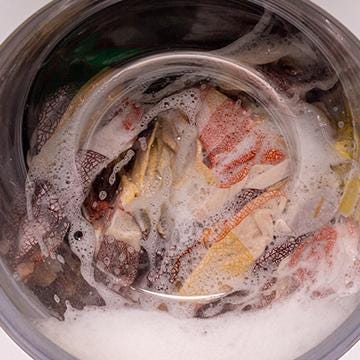
In my last post, I mentioned that sewing is a very small part of the actual quilting process, noting that ironing is a huge part. While it doesn't take as much time, washing, and more specifically pre-washing, is a topic that also deserves some attention.
An important note: Quilters are a serious bunch, and we all have very particular opinions on the best way to assemble the perfect quilt. If there is more than one method to do something, you'll find a strict divide in the quilting community regarding which way is the right way. Pre-washing is one such argument.
For years, I always pre-washed my fabric. My mom taught me to sew and she was a pre-washer, for no other reason than because that's what she was taught.
One day, I was at my local fabric shop and the lovely employee cutting my fabric dropped the bomb shell, "I never pre-wash my fabric."
I was stunned. Literally, mind blow.

I felt as thought the entire universe had flipped on its head. My brain struggled to compute what she had just said. But there were a couple women that agreed with the employee. There was a clear divide of pre-washers and non pre-washers.
I was fascinated that not pre-washing was even possible. When I got home, I had to look this up. How did you account for shrinkage? Didn't the colors run when you did finally wash? Why wouldn't you pre-wash?
Here's what I learned. Pre-washing:
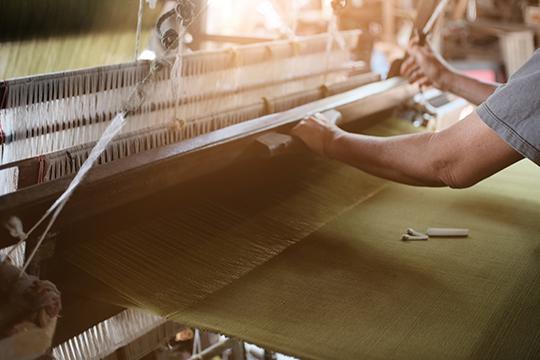
- Relaxes the fabric: Fabric creation is a two-step process. First, raw cotton is spun into thread and then the thread is then woven together on a loom, pulling it very straight and taut during the process. Washing lets those strings relax into a shape they'd prefer to be in. Allows it to shrink: All cotton fabric shrinks at different rates: creating a quilt top with unwashed fabric will look perfect once assembled, but may result in puckering after the first wash and dry. This usually isn't the end of the world, but after working so hard on something, you want it to look perfect once complete.
- Washes out any chemicals that could be added during the manufacturing process. If you've got sensitive skin, wash those chemicals out before you start.
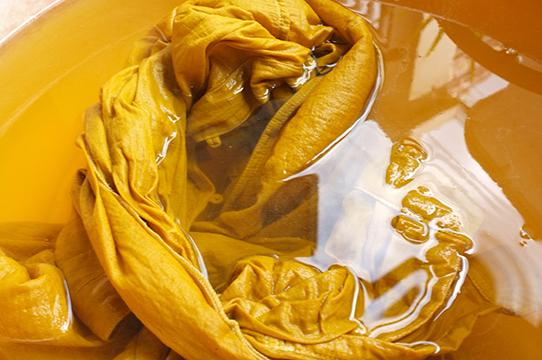
- Lets the dye run: Similar to doing your regular wash, certain colors are prone to run. You know that if you don't want pink underwear, you don't wash it with red shirts. Same here. Waiting until you've assembled the entire quilt, then having a red run onto a white or pale background fabric would be devastating. I recommend three washes: lights, darks, and the colors most likely to run — reds, purples and blues.
- Sets the dye: Now that you've washed off any dye that might run, toss that fabric in the dryer, which will set the colors and prevent them from running in the future.
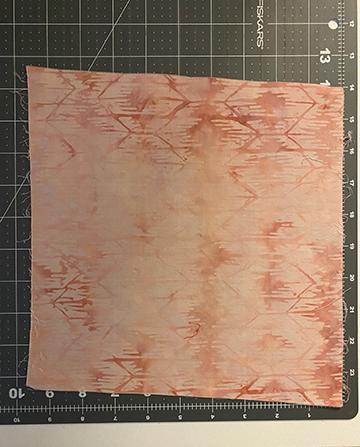
So why wouldn't you want to pre-wash? One word: Precuts. If you are using precuts, whether it's a jelly roll, layer cake, charm pack, or fat quarters, DO NOT pre-wash pre-cuts. I cannot emphasize this enough (see pre-washed 10" square at right). Pre-washing precuts leads to:
- Shrinkage: But wait, you thought that was good thing? Well, when you're pattern calls for 10" squares, there's nothing quite so frustrating as finding yourself with 9-3/4" squares. But how much pain does a 1/4" loss cause? Well, if the pattern asked you to cut the 10" square into a 6" piece and a 4" piece, you are either going to be doing a lot of math to compensate for whichever piece you cut 1/4" short, OR, you'll just scrap the whole project.
- Misshapen fabric: Precuts are bundles of fabric that have been, well, pre-cut to a specific size, with nice sharp corners and straight edges. As noted above, washing and drying allows the fabric to relax, and take the shape it wants to, which means your perfect 90-degree corners are gone and your straight edges are wavy, and you've got a lot of pulling, tugging and stretching ahead of you.
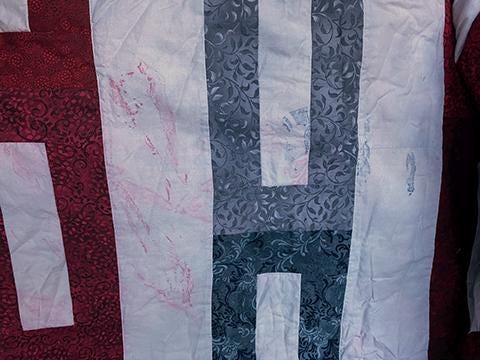
TWO CAUTIONS! It is imperative you wash the final product in cold water. Because if, say, you forget and wash it on warm or hot, well...the outcome isn't pretty. This was set to be a charity donation, but now it will forever adorn my couch, reminding me that pre-cuts aren't pre-washed, and need to be washed on cold.
It's all or nothing. Either you pre-wash all your materials (including the batting and backing) or you pre-wash none of it. You don't want to pre-wash your background material but not your pre-cuts. As noted above, washing shrinks the fabric and severe puckering or pulling at stitch lines could occur.